Social Media Algorithms: “A Conveyor Belt to Someplace Bad”

selective focus photography of person using iphone x
Photo by Kerde Severin on Pexels.com

Gen Z were the guinea pigs in this uncontrolled global social experiment. We were the first to have our vulnerabilities and insecurities fed into a machine that magnified and refracted them back at us, all the time, before we had any sense of who we were. We didn’t just grow up with algorithms. They raised us. They rearranged our faces. Shaped our identities. Convinced us we were sick.

So what chance does the next generation stand? Algorithms were introduced to my generation gradually, in the 2010s. The next cohort of kids, Generation Alpha (born after 2010), is coming online in the 2020s, a time when everything is already at the extreme—beauty standards, dating discourse, therapy culture, political polarization. Every aspect of their lives—from how they look to how they feel to what they believe—will be guided by algorithms from the very start.

Parents of Gen Alpha must take this seriously. I speak to many parents about social media; they worry that their kids will talk to predators or be exposed to explicit self-harm and suicidal content — which are, of course, real risks. But there is also something more pernicious, and more destabilizing happening. Something we have to get ahead of. Because maybe it seems like your child is simply watching some makeup tutorials, following some mental health influencers, or experimenting with their identity. But let me tell you: they are on a conveyor belt to someplace bad. Whatever insecurity or vulnerability they are struggling with, they will be pushed further and further into it. 

What I would say to the parents of Gen Alpha is: don’t let your children open accounts on social media platforms when they are still in early puberty. Delay their entry until at least 16. Prioritize their in-person interactions, and encourage them to discover who they are from real-world experiences, not manipulative algorithms. 

And what I would say to Gen Alpha is simple: get off your screens. Delete the apps. What these continuous streams of content do is prevent you from taking a second to pause, reflect on who you really are, and realize where you are headed.

Because you aren’t ugly. You are probably not sick. And if you are, let a doctor tell you that, not an influencer chosen by an algorithm. Just look at us, in the generation ahead of you. There are a lot of us now in our 20s who feel utterly lost. Detached from who we really are. . . The conveyor belt runs day and night. Let’s do what we can to help Gen Alpha step off—or avoid stepping on in the first place.

Freya India, writing at Jon Haidt’s After Babel Substack, “Algorithms Hijacked My Generation

New technologies cause disruption. They amplify the best and the worst of human nature. They require time for the adaptation of behavior, the accrual of wisdom regarding best use, and the learned discipline that accompanies best use, i.e. boundary setting, desired ends, healthy outcomes, etc.

As an older Millennial (or one of the youngest Gen Xers, depending on where you draw the line), I’ve been subject to the problems and distortions brought about by the internet age. I became an active user of the internet in late Web 1.0, remaining online through Web 2.0, and now bracing for what is ahead with Web 3.0. I have not passed through these transitions unscathed, and the irony of calling myself an internet “user” has not escaped me. Some hope the future of the web will look more like its past, with a return of micro-communities as majorities abandon social media platforms. I also have fond memories of the blogging days.

My assessment is that the future of the internet will have continuity and discontinuity with its past, offering an engine of mass distraction for vast majorities of the populace, while simultaneously creating space for micro-niches of generativity, creativity, and connection, yielding both good and bad. We’ll fix some problems. We’ll create others. We’ll learn some lessons. We’ll unlearn others. The human fabric is always fraying and being mended. The sages among us will share their wisdom, and those with ears to hear will be wise to listen and put what has been learned into practice. Furthermore, they will do well to pass those lessons down another generation.

That’s where Ms. India’s essay comes in, featured by Jon Haidt at his After Babel Substack newsletter. She’s paying attention. She’s seeing what social media services, at their worst, produce. She’s sounding the alarm. If social media engines were housed in a factory somewhere vulnerable to a good smashing, the next step would be obvious.

I suspect frying all the servers would be just as fruitless as the actions of those Luddites of old. The hydra would continue sprouting heads. Social media, in some form, will persist.

Habits of resistance, then, must be cultivated. Ms. India’s essay helps by exposing us to social media’s most pernicious effects. She offers a warning and directs us toward safe passage.

In Homer’s Odyssey, the hero Odysseus desires to hear the song of the sirens. Their song was beautiful and irresistible to those who heard it. But hearing their song led to destruction. In order to hear it and survive, Odysseus orders his men to tie him tightly to the mast, to restrain him as their ship sailed by these creatures. The crew was to plug their ears with beeswax. They were not permitted to hear it themselves. Odysseus, however, would receive their song freely and fully. The crew was to keep him secured tightly no matter his degree of begging, pleading, madness, or protestation. Odysseus survives their song. His crew passes to safety. Some writing after Homer claimed the sirens were fated to die if any heard their song and lived. Odysseus, then, could add the sirens to his list of those he vanquished.

Perhaps Ms. India is a modern Odysseus. Maybe her work will not only spare her crew. Maybe monsters will be slain, freeing countless others from the suffering that might have been.

When I speak with my children about the power of social media, they have difficulty imaging its destructive effects. I am very aware that my influence is countered by that of their peers, who outnumber me by far, and who are part of relational networks that make different choices than those I advocate for. I’ve been pressured to make compromises, to reason with my children as best as I’m able, to permit them to make their own discoveries (and mistakes), to remain in dialogue with them about which choices might be better, more life giving, more wise. I constantly encourage them to look for something better than what the world places before their eyes, to not only look at things seen, but to things unseen, even things to come.

As human beings, we fix our gaze on something. We look to our community, culture, and traditions for identity and meaning. We look for models. At present, we look into the portals opened by our phones. We’re fed and we’re led. We’re captivated, carried away. More often than not, we know not where we are being carried, only to arrive and wonder how we ended up in such a strange place, with such a strange way of being, if we wonder at all.

We’re made to gaze on something better, something divine. As a Christian person, I believe we are made to gaze upon God, the God in whose image we are made and who remakes us into that image through the redemptive work of Jesus Christ. But to be remade, we must behold. We must look to the Lord, our Maker.

But if we are to behold, we have to break our gaze from elsewhere, whether it be social media or ourselves. Temptations are pervasive. Distractions are innumerable. The spells cast by social media algorithms are seductively powerful. They must be resisted. They must be named. They must be rebuked.

One step in that direction is to expose social media algorithms as the siren-sounding lie machines they are, made not to connect or educate or help or mobilize or empower us, but to engage, consume, and devour us, until we are completely and totally possessed.

Social Media Trade-Offs

Social media applications on mobile

Writing about individual choice and social media technology for Discourse Magazine, Bryan Gentry argues:

Any time that we spend on entertaining technology is time for which we sacrificed something else. A 2007 study found that teenagers who played video games for eight hours each week spent less time reading and doing homework than non-gamers, and less time with family and friends (except when playing games with them). In 2016, researchers in a U.K. study found that time spent on social media meant less time being physically active and lower physical fitness.

Time trading may also change our values. A study earlier this year found that teens with more screen time prayed and read scripture much less often, even those from highly religious families.

Gentry draws from Lois Lowry’s The Messenger and Son, and dubs our choice to be on social media (or other forms of entertainment technology) instead of engaging in other worthwhile activitie, like exercise, socializing, or prayer “time trading.”

We’re not only trading time. We’re trading well-being and human flourishing. We’re trading connection. We’re trading creativity and insight. We’re trading deep meaning discovered in moments human and divine.

For years I’ve heard people say, “No one ever says at the end of their life, ‘I wish I had spent more time at the office.'” In another fifty years, people may say the same about time on a smartphone.

Old Hardware, Once Treasured, Begs

Hard times.

Discovered the above here. Was reminded of “The Lifecycle of Software Objects,” a short story in Ted Chiang’s collection Exhalation, in which digitally created entities, or “digients,” interact with human trainers who help them grow and develop. The trouble comes when the software company that developed these digital products goes bankrupt, and the digital world hosting these interactions becomes dated and obsolete. Chiang’s short story is provocative, inviting reflection on how we interact with technology and what it means to be human.

The Macintosh Classic II is a piece of hardware, running software that gives it the appearance of a human face. We do not think of “things” as having personality, but we relate to them as though they do. When they fail us, we get angry at them, as though they possess a will instead of a malfunction. Who among us has not called a computer stupid? We interact with our things, our technology, often more than we do people! The computer on which I’m writing this post is but one link in the chain of technological mediation standing between us. We become attached to our machines, too. We develop a bond, perhaps affections.

Until we upgrade. Then we move on.

If you watch the video above, you’ll see the Macintosh placed on a city street, passed by pedestrians, with few turning their heads. This computer was placed outside an Apple Store, begging for change. The irony. The company that created the machine could bring it in for recycling. But then that’d be the end of that piece of hardware. Before pulling the plug, you’d have to look into those eyes.

It’s a wonderful piece of art, doing what art does, making us evaluate how we see and how we think, raising questions, inviting reflection, pondering what is true.

Digital Connectivity is Overrated

Image by Simon Hu from Pixabay

Cal Newport relays a story from a reader named Peter who recently visited the Lyndon B. Johnson State Park and Historic Site in Stonewall, Texas. LBJ had a phone installed poolside while serving as president in order to remain accessible. A tour guide told visitors this story, who responded with laughter. We all have phones now. Everywhere.

Newport observes:

In an age of smartphones, everyone has access to a phone by the pool. Also in the bathroom. And in the car. And in every store, and on every street, and basically every waking moment of their lives. The average teenager with a iPhone today is vastly more connected than the leader of the free world sixty years ago.

I thought this was a good reminder of the head-spinning speed with which the connectivity revolution entangled us in its whirlwind advance. We haven’t even begun to seriously consider the impact of these changes, or how us comparably slow-adapting humans must now adjust. Be wary of those who embrace our current moment as an optimal and natural evolution of our species’ relationship with technology. We still have a lot of work ahead of us to figure out what exactly we want. After sufficient reflection, it might even turn out that taking a call by the pool, LBJ style, isn’t as essential as we might have once imagined.

And this is exactly right. Who knows what we’ll think about the smartphone in another ten, twenty, or fifty years?

We may discover that our obsession with social media has proven even more destructive, harmful, and wasteful than we perceive it to be now. The smartphone has affected how we consume news, who and what we consider a friend, our social expectations, our speed of life, our perception of the “good life,” and our emotional, mental, and spiritual well-being. We may find that a flourishing human life doesn’t depend on the connectivity created by digital technology, but is found instead in something older and much less dependent on a screen, an electronic portal allowing us to transcend time and space.

What would that be? Unmediated human connection; flesh and blood presence, conversation, and shared activity. Doing things together in the concrete, rather than the digital.

Newport is careful. He says that digital connectivity may prove to be less essential than we imagined. It will still have a place. But it may be better to begin finding ways now to lessen dependence on our smartphones, create space for solitude and silence, designate spaces and zones where digital connectivity is no longer expected or required, and invest our energy in connecting face to face with family members, neighbors, and others living nearby.

Reduce Digital Distractions

It is possible to simplify your digital life, ditch social media, reduce digital clutter, and lead a more productive and happier life. Read this blog post by Cal Newport, reporting on Aziz Ansari, social media, and productivity.

The commenters don’t like Cal’s point, saying that only the established and successful can ditch social media. I don’t agree with that. I don’t think anyone needs social media to make it, not even comedians. What matters, in the end, is whether or not you can step on stage, pick up a microphone, and be funny in the room. If you can do that, it doesn’t matter a lick how funny you are on the web.

And in other fields, your success isn’t contingent on what you do on a social media platform, but whether or not you deliver in the actual realm of your chosen field. Social media isn’t real life. It never was.

And Kevin Kelly, of Wired, passed along 103 bits of advice on his 70th birthday. A lot of good stuff, but my favorite is this: “Your time and space are limited. Remove, give away, throw out things in your life that don’t spark joy any longer in order to make room for those that do.”

About Haidt’s Babel

Babel is a metaphor for what some forms of social media have done to nearly all of the groups and institutions most important to the country’s future—and to us as a people. How did this happen? And what does it portend for American life?

Jonathan Haidt, “Why the Past 10 Years of American Life Have Been Uniquely Stupid

This raises the question as to whether America is under judgment. Is social media a vehicle for divine wrath?

The dominant accounts of the Internet’s rise in the 1990s are filled with positive sentiment, pointing to the web’s promise as a vehicle for human connection and the sharing of ideas. Haidt follows this standard account, and there is much evidence to support it. But as technologies have developed and social media has come to dominate the Internet’s landscape, Haidt argues that the social fabric has been weakened. Twitter, Facebook, and the like have eroded social capital, undermined institutions, and weakened the commonalities established through a shared story. We’ve unraveled.

I’ll call this the erosion thesis. Things were good, and social media has been tearing it down. It is certainly plausible.

My working thesis, however, hasn’t been one of decay. Rather, I think we’ve experienced a revelation, an apocalypse. As more and more people joined social media, we have been enabled to see more and more of what humanity is, especially at the fringes. Social media amplified what was marginalized or shaded within localized communities (what Haidt refers to as “hidden communities”), and enabled the loudest voices to ascend and dominate the room. We’re now seeing more and less of humanity at the same time. We see more of those formally pushed to the margins. We see less of those within the mainstream.

“Normals” have gone dark on social media. They’ve been shouted down and shamed. Without the average citizen, our perceptions of “normal” shift. We’re comparing fringe to fringe.

Haidt’s account offers tremendous insight into the ways “viral dynamics” changed social media, our digital ecosystems, and the nature of our public discourse. And once you understand those dynamics, you can begin to understand why social media environments have become what they have become, and why some people have abandoned those hellscapes.

Those remaining on social media remind me more of the various tribes and factions roaming the world of Mad Max, protecting their fiefdoms, scanning horizons, and marauding and destroying anyone who dares step on their turf and violates their norms. Twitter is Thunderdome. Virality incentivized hatred, purity, and extremism. As Haidt writes, “The newly tweaked platforms were almost perfectly designed to bring out our most moralistic and least reflective selves. The volume of outrage was shocking.”

Social media has yielded a mob, not a “public” or a “town” or a “global village.” Mob dynamics are very different than discourse dynamics. Haidt observes, “When our public square is governed by mob dynamics unrestrained by due process, we don’t get justice and inclusion; we get a society that ignores context, proportionality, mercy, and truth.” Rationality goes out the window. Impulse takes over. We move from the human to the animal. Bearers of the divine image become beasts.

And apparently, we’re stuck. There is no going back. Haidt claims:

We can never return to the way things were in the pre-digital age. The norms, institutions, and forms of political participation that developed during the long era of mass communication are not going to work well now that technology has made everything so much faster and more multidirectional, and when bypassing professional gatekeepers is so easy. And yet American democracy is now operating outside the bounds of sustainability. If we do not make major changes soon, then our institutions, our political system, and our society may collapse during the next major war, pandemic, financial meltdown, or constitutional crisis.

That’s downright scary. Can we prevent a societal collapse? That’s uncertain. But Haidt proposes that we harden democratic institutions, reform social media, and prepare the next generation by equipping Gen Z with wisdom on how to steward usage of digital technologies. These might be hints toward a solution, but in no way do these proposals add up to a plan.

And I’m not sure a workable plan is possible, due to the fragmentation and division wrought by our present circumstance. America is too big, too geographically diverse, and too divided among ideological and class lines to expect a renewal of social capital, trust in institutions, and adoption of shared stories. If such a renewal were to occur, from whence would it come?

At the conclusion of the essay, Haidt states, “What would it be like to live in Babel in the days after its destruction? We know. It is a time of confusion and loss. But it is also a time to reflect, listen, and build.”

Who is this “we?”

It won’t be the same “we” who pass their days on the world of Twitter, pretending that the Internet is the real world. It will be the “we” who have returned to local communities and local work, who develop shared discourses and make common commitments, and who adopt common stories and a common purpose. “We” are those who build institutions, who establish trust through action, and who tell a story that’s true.

Such communities can be established on any number of foundations. But the one I have in mind, one that has tremendous promise, are communities that are already familiar with the Babel story, who know that after Babel comes Abraham, a covenant, and the establishment of a community called to acknowledge God as God and people as not, and who are tasked with bearing the image of the divine before the watching world as stewards and servants.

Who am I thinking of? I’m thinking of the church.

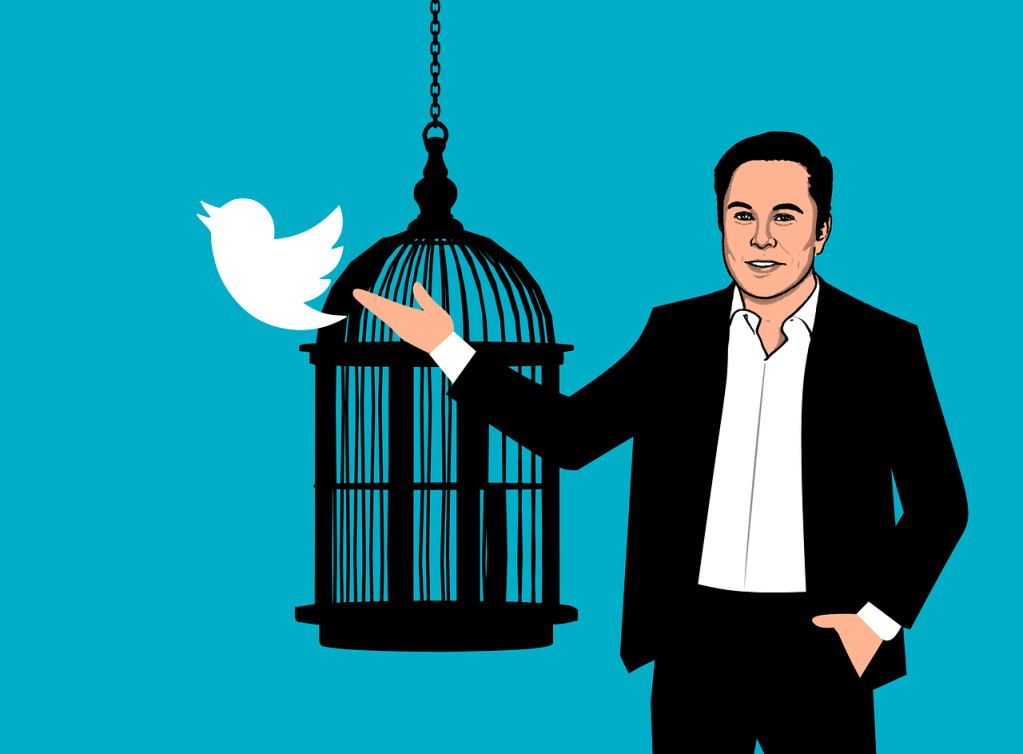
Elon Musk Owns Twitter? Okay.

I haven’t been on Twitter for two or three years now. I haven’t missed it. Elon Musk takes over, and now people are asking if he can “save” Twitter, if he can somehow transform it into something other than the cesspool it has become.

I doubt it.

But the man isn’t an idiot. And he doesn’t seem to care what certain members of the elite class think about him. That’s admirable.

Statements calling Twitter the world’s digital commons or the global public square are, in my opinion, wrong. Cal Newport, on a recent podcast, alluded to an essay by Jonathan Haidt, where Twitter was likened to the Roman Colosseum, a place where elites once gathered to watch one group of people draw blood from another group of people for the purposes of spectacle and entertainment. I think that’s more accurate.

Twitter is a mob scene. It is a digital avenue by which “Legion” is allowed to invade one’s mind and take possession of one’s soul. A few algorithmic tweaks here and there might make it better. But what it really needs is an exorcism.

We’ll see how Elon does as the internet’s digital priest. We’ll see if digital openness and transparency on policy has the effect of light casting out darkness.

Or, we’ll find that even Elon isn’t enough, that a visit to Mars is more attainable, and Twitter will go the way of the dinosaur, the dodo, and Tom from MySpace.

What a Description

With my daily life so indelibly marked by the presence of the digital, I have increasingly felt that when Apple’s fan base hailed the first iPhone as the “Jesus phone,” this moniker was more telling than they could ever imagine. As a person of faith who has been steeped in the understanding that Jesus Christ transforms anyone who opens themselves to his presence, I can personally testify to the curious ways that the Jesus phone has transformed me since I “accepted it into my life.” My relationships, my work patterns, my routines of how I spend my time and how I engage my spaces, even the patterns of thinking and my heart’s preoccupations–all of these have been quietly shifting and changing. Indeed, when I stop to recall what life had been like before it became enveloped by digital ubiquity, I need to work at remembering: What did consciousness feel like before mobile devices, email, and the internet? The difficulty in summoning up the memory of what that state of existence felt like reveals how clearly the logic and presence of all things digital in my life have incrementally but definitively made me into a new creation. That I barely can perceive this transformation when I consider how I move through my daily engagements signals how most everyone around me has undergone a similar transformation too.

Felicia Wu Song, Restless Devices: Recovering Personhood, Presence, and Place in the Digital Age

A mass conversion event. Almost 60% of the mobile phones in use in the world are iPhones. There are over 6 billion smartphone users globally. This isn’t just a market phenomenon. It’s a spiritual shift.

Toxic, and They Know It

Photo by Solen Feyissa on Unsplash

“Thirty-two percent of teen girls said that when they felt bad about their bodies, Instagram made them feel worse,” the researchers said in a March 2020 slide presentation posted to Facebook’s internal message board, reviewed by The Wall Street Journal. “Comparisons on Instagram can change how young women view and describe themselves.”

For the past three years, Facebook has been conducting studies into how its photo-sharing app affects its millions of young users. Repeatedly, the company’s researchers found that Instagram is harmful for a sizable percentage of them, most notably teenage girls.

“We make body image issues worse for one in three teen girls,” said one slide from 2019, summarizing research about teen girls who experience the issues.

“Teens blame Instagram for increases in the rate of anxiety and depression,” said another slide. “This reaction was unprompted and consistent across all groups.”

Among teens who reported suicidal thoughts, 13% of British users and 6% of American users traced the desire to kill themselves to Instagram, one presentation showed.

Georgia Wells, Jeff Horwitz, and Deepa Seetharaman, The Wall Street Journal, “Facebook Knows Instagram is Toxic for Teen Girls, Company Documents Show

This confirms what we already knew intuitively and experientially.

The question then, is, “What will we do about it?”

Will the Search Be Undertaken?

Photo by Solen Feyissa on Unsplash

Leigh Stein’s “The Empty Religions of Instagram,” appearing in The New York Times, identifies a multi-layered problem. This past year we’ve experienced isolation due to the pandemic, we’re addicted to our phones, and we long for connection, meaning, and transcendence. It turns out we are human after all.

But many millennials and Gen-Zers are not affiliated with a religious tradition. Emerging generations either did not receive formation in a religious tradition or have disaffiliated with the tradition of their youth for various reasons. Ms. Stein is one of those millennials. She substituted political activism for a stretch. Social media has been an outlet.

But both have come up short. Ms. Stein writes:

I have hardly prayed to God since I was a teenager, but the pandemic has cracked open inside me a profound yearning for reverence, humility and awe. I have an overdraft on my outrage account. I want moral authority from someone who isn’t shilling a memoir or calling out her enemies on social media for clout.

Left-wing secular millennials may follow politics devoutly. But the women we’ve chosen as our moral leaders aren’t challenging us to ask the fundamental questions that leaders of faith have been wrestling with for thousands of years: Why are we here? Why do we suffer? What should we believe in beyond the limits of our puny selfhood?

The whole economy of Instagram is based on our thinking about our selves, posting about our selves, working on our selves.

Her perspective turns following a conversation with a person of an older generation:

My mom is an influencer in the old-school sense — at 72, she still works full time as a psychotherapist, she’s a lay minister at her church, and she fills her free time with volunteer work. Her sermons are a combination of therapeutic tips, references to current events, and lessons from scripture about having compassion for the other even during times of intense polarization.

I told her that I find myself craving role models my age who are not only righteous crusaders, but also humble and merciful, and that I’m not finding them where I live (online). Referring to the influencers who have filled the void religious faith has left for people like me, she said, “They might inspire you to live your best life but not make the best use of your life.”

And her conclusion is an outright stunner:

There is a chasm between the vast scope of our needs and what influencers can provide. We’re looking for guidance in the wrong places. Instead of helping us to engage with our most important questions, our screens might be distracting us from them. Maybe we actually need to go to something like church?

Contrary to what you might have seen on Instagram, our purpose is not to optimize our one wild and precious life. It’s time to search for meaning beyond the electric church that keeps us addicted to our phones and alienated from our closest kin.

But where will she, and others like her, ultimately land?